Physical Address
304 North Cardinal St.
Dorchester Center, MA 02124
Physical Address
304 North Cardinal St.
Dorchester Center, MA 02124

NASA's Neil Gehrels Swift Observatory resumed two of its three science instruments Aug. 26 after a commercial rescue mission to boost its orbit fell through.
 BySandy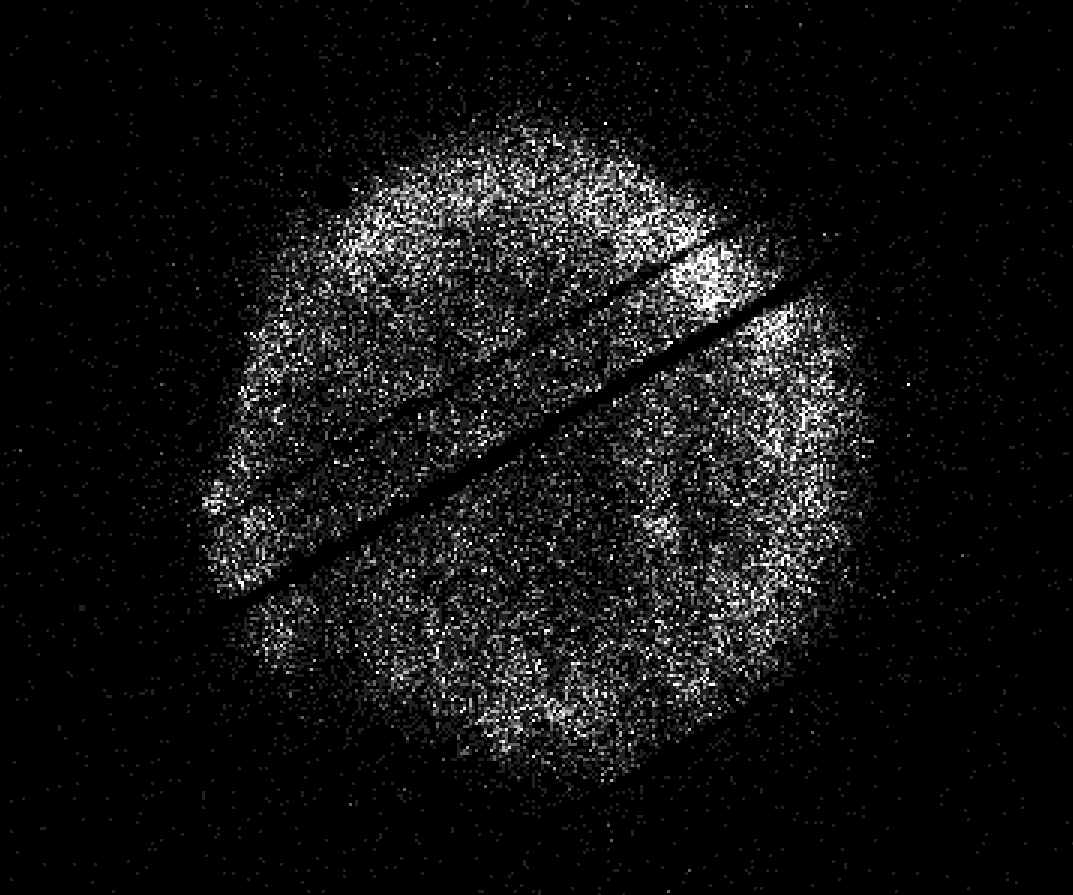
NASA’s Neil Gehrels Swift Observatory resumed operating two of its three science instruments on Wednesday, Aug. 26, after a commercial mission designed to boost the satellite to a higher orbit was scaled back. The Swift team turned the mission’s Ultraviolet/Optical Telescope and X-ray Telescope back on, restoring instruments that had been switched off since February to reduce atmospheric drag while ground teams prepared for the boost attempt.
The observatory’s third instrument, the Burst Alert Telescope, remains offline. NASA halted its use in April to cut power consumption so Swift’s solar panels could be angled to further reduce drag. The Swift team says it is working to return that instrument to data collection within the next few weeks.
In September 2025, NASA contracted Katalyst Space to attempt a boost of the aging observatory, giving the company one year to design, build, test, and launch a spacecraft called LINK, then use it to meet, grab, and lift Swift into a higher, more stable orbit. LINK launched in July 2026 aboard a Northrop Grumman Pegasus rocket from the Marshall Islands.
Later that month, LINK developed problems controlling its orientation. NASA and Katalyst announced Aug. 19 that LINK would not proceed with capturing and boosting Swift. Katalyst will still attempt to rendezvous with the observatory and conduct proximity operations, using the encounter to test and demonstrate in-orbit satellite servicing technology for future missions.
Earth’s atmosphere creates drag on every spacecraft in low Earth orbit, gradually lowering their altitude unless, like Swift, they carry no propulsion system to counteract the effect. Recent solar activity, tied to the sun’s approach toward the maximum phase of its 11-year cycle, magnified that drag on Swift, causing the observatory to lose altitude faster than engineers had anticipated.
NASA’s own projections had shown that switching to low-drag operations would keep Swift above 185 miles (300 kilometers) of altitude until October. Below that threshold, operating the telescope becomes difficult, and its rate of descent increases quickly. With science observations now resumed, the Swift team expects the observatory to reach that critical altitude sometime within the next one to two months. Absent further intervention, NASA has said Swift is likely to reenter Earth’s atmosphere later this year, largely burning up in the process.
Swift has spent 21 years as one of NASA’s most versatile tools for studying high-energy events across the cosmos. It observes a wide range of wavelengths, can rapidly repoint to catch short-lived outbursts such as gamma-ray bursts, and sends alerts to other observatories on the ground and in space to coordinate follow-up observations before a transient event fades.
The X-ray Telescope’s return to service was marked by an image of Tycho’s supernova remnant, captured on Aug. 26, the same day the instrument came back online. The remnant lies about 13,000 light-years away in the northern constellation Cassiopeia. In the image, each white dot represents a single X-ray photon detected by the telescope; the dark streaks crossing the frame are artifacts of the imaging system rather than features of the remnant itself.
The Swift team’s near-term priorities are restoring the Burst Alert Telescope to service and monitoring the observatory’s altitude as it continues its gradual descent. NASA has not announced a revised end date for the mission, and the outcome now depends on how quickly Swift loses altitude relative to the one to two month window the team has projected.
Swift’s situation reflects a broader challenge facing aging spacecraft without onboard propulsion: once atmospheric drag begins to dominate, a mission’s remaining lifetime becomes a function of solar activity and orbital mechanics as much as the health of its instruments. The observatory’s science team is continuing to collect data for as long as the spacecraft remains at a workable altitude, extending a 21-year record of observations that has shaped how astronomers track the universe’s most fleeting events.
Source: NASA Goddard Space Flight Center, Neil Gehrels Swift Observatory. Primary source: https://science.nasa.gov/blogs/swift/2026/08/28/nasas-swift-restarts-science-observations/.