Physical Address
304 North Cardinal St.
Dorchester Center, MA 02124
Physical Address
304 North Cardinal St.
Dorchester Center, MA 02124

UC Riverside astrophysicist Stephen Kane found Venus appears to rotate 60 times faster than it truly does because astronomers were measuring atmospheric winds, not planetary rotation.
 BySandy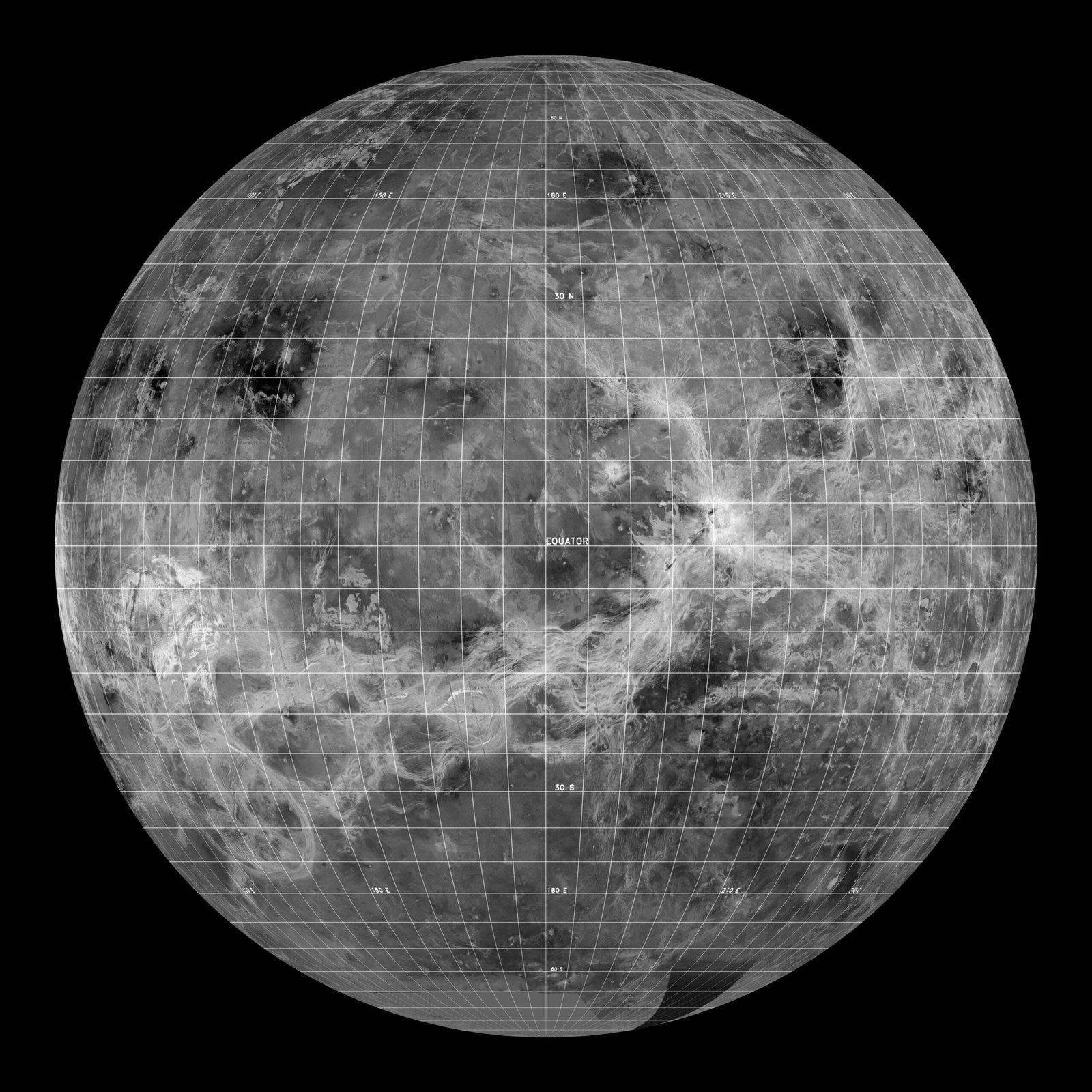
A new study from the University of California, Riverside warns that astronomers measuring the rotation of distant exoplanets may often be measuring atmospheric winds instead of the planet itself. The research, led by planetary astrophysicist Stephen Kane and published in The Astronomical Journal, uses Venus as a cautionary example: the planet’s clouds circle the globe roughly 60 times faster than Venus actually rotates. The findings matter beyond Venus, since accurately measuring rotation is essential to modeling the climate of any planet, including potentially habitable worlds.
Venus takes 243 Earth days to complete one rotation on its axis, one of the slowest rotation rates of any object in the solar system. Its upper atmosphere, by contrast, circles the planet in only about four days, a phenomenon known as super-rotation. “This is what people originally thought about Venus,” Kane said. “If you just look at the atmosphere of a planet like Venus, you’d think it rotates once every four days, and you’d be wrong by almost two orders of magnitude.”
The speed of a planet’s rotation helps determine how energy from its star gets redistributed around the globe, shaping weather patterns and the interaction between atmosphere and any oceans present. “People tend to overlook planetary rotation, but it is absolutely key to understanding a planet’s climate,” Kane said. Get the rotation rate wrong, and every climate model built on top of it inherits that error. For planets orbiting other stars, astronomers generally cannot observe a solid surface spinning the way they can with Mars, so they must rely on atmospheric measurements that, as Venus demonstrates, do not necessarily reflect the rotation of the world underneath.
Kane’s paper does not just diagnose the problem. It proposes observing the same planet at multiple wavelengths, including infrared, to probe deeper layers of its atmosphere. On Venus, wind speeds decrease closer to the surface. By comparing measurements taken at several atmospheric depths, scientists could reconstruct how wind speed changes with depth and use that model to better estimate the rotation rate of the solid planet itself, rather than just its weather.
In a separate paper published in Publications of the Astronomical Society of the Pacific, Kane and co-author Emma Miles, a UC Riverside doctoral student, predict that the European Space Agency’s PLATO mission, scheduled to launch in March 2027, will discover several hundred Venus-like exoplanets. PLATO will carry 26 ultra-sensitive cameras and observe some regions of sky for years at a time, making it sensitive to planets with longer orbital periods than previous transit-hunting missions have typically found. Because many of the planets PLATO detects will orbit relatively bright stars, they will also make good targets for follow-up atmospheric observations with the James Webb Space Telescope.
“We’ve learned a lot about Venus itself, but there is still so much we don’t understand about its history,” Miles said. “Exo-Venus candidates, which are Venus-like planets in other solar systems, are going to play a huge role in filling in that knowledge gap.” Miles noted that PLATO will also be able to measure the ages of host stars, allowing researchers to place each exo-Venus candidate within its own evolutionary history. If most of the exo-Venuses PLATO finds turn out to be slow rotators like Venus itself, that would suggest slow rotation is an important ingredient in turning a planet into a greenhouse world. If their rotation rates vary widely instead, researchers will need to look elsewhere for an explanation.
Comparing Venus to a larger population of similar worlds could help resolve one of the solar system’s enduring questions: why Venus, a planet built to roughly the same size and recipe as Earth, became a crushing, lead-melting hellscape while Earth kept its oceans and temperate climate. “Venus is a giant mystery,” Kane said. “To understand it, we need to see Venuses in other systems and see how they changed through time. Rotation is a huge piece of that puzzle, and we need to be careful that what we think we’re measuring is really the rotation of the planet.”
Source: University of California, Riverside, Department of Earth and Planetary Sciences. Published in: The Astronomical Journal and Publications of the Astronomical Society of the Pacific. Primary source: https://news.ucr.edu/articles/2026/08/10/slow-spin-could-explain-why-planets-become-hellish.