Physical Address
304 North Cardinal St.
Dorchester Center, MA 02124
Physical Address
304 North Cardinal St.
Dorchester Center, MA 02124

NASA's Nancy Grace Roman Space Telescope activated its Coronagraph Instrument on September 1, 2026, beginning months of tests before it directly images giant exoplanets and dusty disks.
 BySandy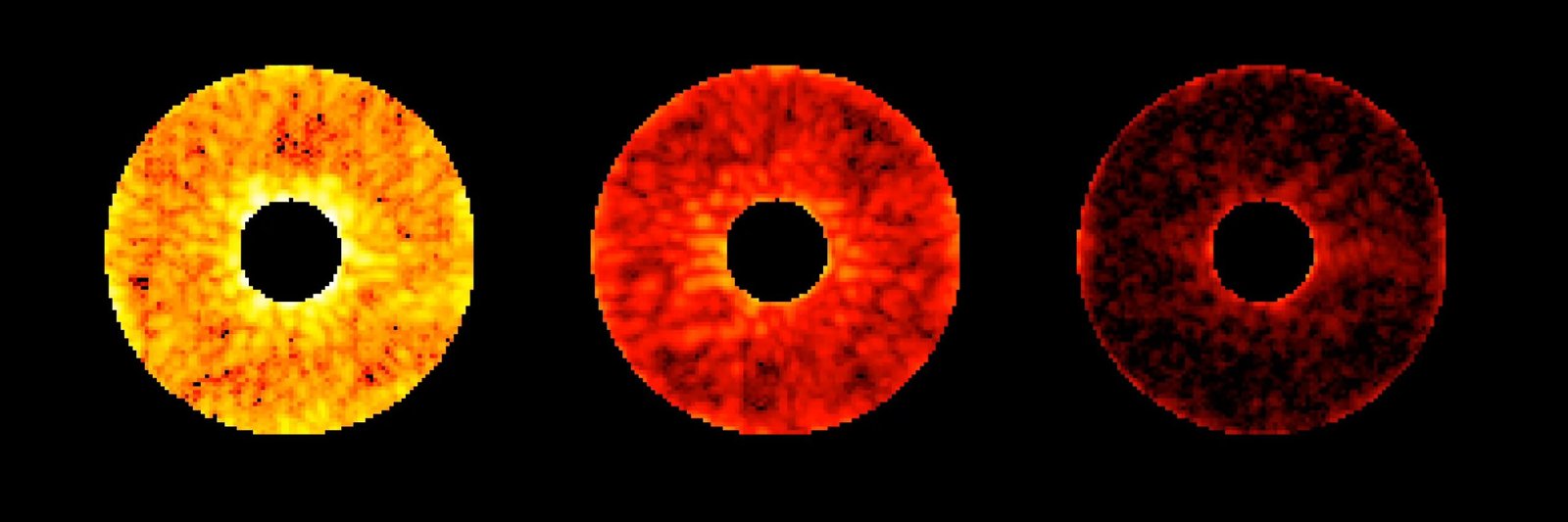
NASA’s Nancy Grace Roman Space Telescope has powered on its Coronagraph Instrument, the tool built to block starlight so astronomers can directly photograph planets orbiting nearby stars. The power-on sequence began at 7:27 a.m. EDT and completed at 8:22 a.m. EDT on September 1, 2026, NASA reported. The instrument now enters a monthslong series of calibrations and tests before beginning full science operations.
The Roman Coronagraph Instrument was designed and built at NASA’s Jet Propulsion Laboratory (JPL), which manages the instrument for the agency. It is a system of optics, masks, self-flexing mirrors, and sensors intended to demonstrate the most advanced starlight-suppression technology ever flown in space. The coronagraph is the first active coronagraph designed to fly in space, meaning it carries components that respond in real time to counteract distortions that would otherwise scatter starlight. Two deformable mirrors at the heart of the instrument are each just 2 inches (5 centimeters) in diameter, backed by more than 2,000 tiny pistons that move up and down to reshape the mirror surface in real time.
Those pistons compensate for optical imperfections smaller than the width of a strand of DNA, correcting the stray starlight that otherwise leaks around the edges of the coronagraph’s masks. In JPL testing prior to launch, engineers used lasers and specialized optics to simulate starlight and demonstrated progressively darker “dark holes,” the region of the field of view where starlight has been suppressed enough for a faint planet to become visible. The Roman Coronagraph has contributions from ESA (the European Space Agency), the Japanese Aerospace Exploration Agency (JAXA), the French space agency CNES, and the Max Planck Institute for Astronomy in Germany.
Direct imaging, the technique of capturing light reflected or emitted by a planet itself rather than inferring its presence from a star’s dimming or wobble, has so far mostly revealed hot, young super-Jupiters in wide orbits, where a planet’s own heat makes it easier to distinguish from its star. Roman’s coronagraph is designed to push past that limit. By suppressing starlight far more effectively than any coronagraph flown before it, the instrument aims to image giant planets that are older, colder, and orbiting closer to their stars, categories of worlds direct imaging has largely been unable to reach.
The Roman coronagraph team has scheduled a total of three months of observations, spread across the mission’s first year and a half of operations, to test the instrument’s performance on real targets. Roman will also search for planets using two other established methods: microlensing, which detects planets by how their gravity bends and brightens the light of a background star, and the transit method, which spots planets by the tiny dip in starlight as they cross in front of their host star.
The coronagraph activation comes three days after Roman launched aboard a Falcon Heavy rocket on August 29, 2026, and on the same day the spacecraft’s antenna and sunshade-like visor deployed. The telescope is managed by NASA’s Goddard Space Flight Center, with participation from JPL and Caltech/IPAC in Southern California and the Space Telescope Science Institute in Baltimore. The primary industrial partners on the mission are BAE Space and Mission Systems in Boulder, Colorado; L3Harris Technologies in Melbourne, Florida; and Teledyne Scientific & Imaging in Thousand Oaks, California.
Roman’s field of view is at least 100 times larger than that of the Hubble Space Telescope, and its primary mission is to survey dark matter and dark energy across large swaths of the sky. The coronagraph is a technology demonstration riding alongside that primary mission, one whose success or failure will shape the instruments built for future observatories designed explicitly to image and characterize potentially habitable worlds.
The coronagraph’s activation marks an early, technical milestone rather than a scientific result: no images of exoplanets have yet been released, and the instrument’s performance will not be fully known until calibration concludes. Its outcome will inform how NASA designs the next generation of instruments meant to search for signs of life in the atmospheres of planets beyond our solar system.
Source: NASA, Nancy Grace Roman Space Telescope mission (Goddard Space Flight Center / Jet Propulsion Laboratory). Primary source: https://science.nasa.gov/blogs/roman/2026/09/01/nasa-romans-planet-imager-has-powered-on/. Additional instrument detail from NASA/JPL: https://www.jpl.nasa.gov/images/pia26279-roman-coronagraph-digging-the-dark-hole/.
Further reading on OrbitGeo: How Direct Imaging Reveals Distant Worlds | Inside NASA’s Nancy Grace Roman Space Telescope Launch