Physical Address
304 North Cardinal St.
Dorchester Center, MA 02124
Physical Address
304 North Cardinal St.
Dorchester Center, MA 02124

Archival Subaru Telescope images showed comet 28P/Neujmin brightening near opposition the way a high-reflectance asteroid would, despite having the surface color of a dark, low-reflectance one.
 BySandy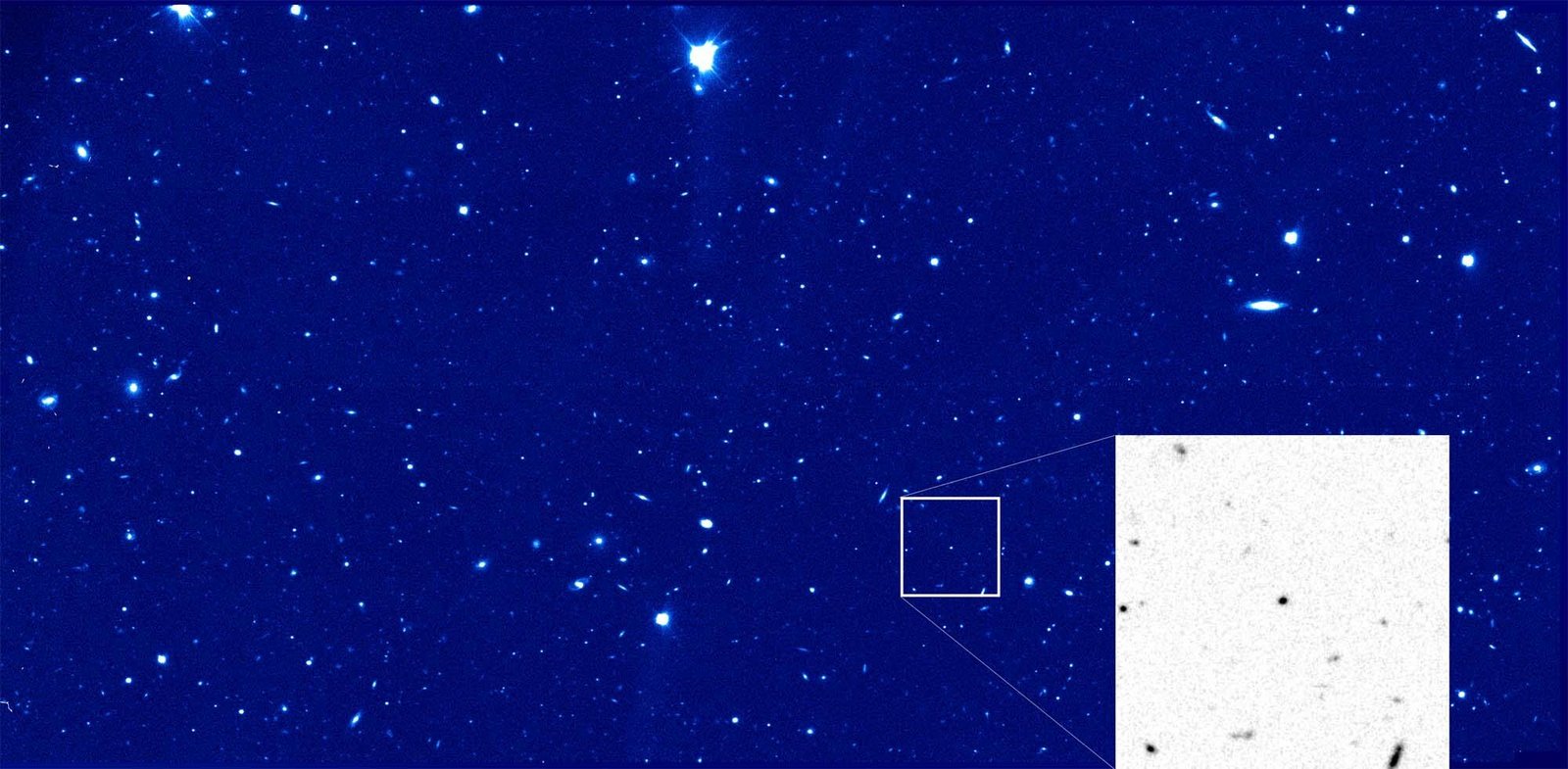
A research team using archival data from the Subaru Telescope has made the first precise ground-based measurement of how light reflects off a cometary nucleus, the solid body normally hidden beneath a comet’s cloud of gas and dust. The comet, 28P/Neujmin, turned up by chance in public data never intended to study it, and its surface behaved unlike anything in the asteroid population it otherwise resembles.
The findings come from scientists at the University of Occupational and Environmental Health, Kyoto Sangyo University, and the National Astronomical Observatory of Japan (NAOJ), who published the work in the Publications of the Astronomical Society of Japan on August 25, 2026.
The team was systematically searching publicly available images from the Subaru Telescope’s Hyper Suprime-Cam (HSC), gathered under the Subaru Strategic Program, to look for Solar System objects that had wandered into frame during observations built for other purposes. In that archive they found Comet 28P/Neujmin sitting more than 10 astronomical units from the Sun, farther than the distance from the Sun to Saturn, with no visible coma.
At that distance, the comet’s ice stays frozen and no surrounding cloud of gas and dust forms, leaving its solid nucleus exposed to direct observation for one of the only times such measurements are possible. Detecting an object that faint required Subaru’s 8.2-meter primary mirror, while HSC’s wide field of view was what let the comet appear in frame at all, despite not being the target of the original observations.
The archival images also happened to catch the comet at a Sun-comet-Earth phase angle of 0.33 degrees, an alignment astronomers call opposition, where the observer views an object with the Sun almost directly behind them. Near opposition, shadows cast by surface particles nearly disappear and light scattered between grains bounces back toward the observer, producing a measurable spike in brightness known as the opposition effect.
According to NAOJ, this marked the first clear ground-based detection of opposition brightening in a cometary nucleus. Opportunities to catch a comet under such favorable geometry, far enough from the Sun to stay coma-free and precisely aligned for opposition, are extremely rare.
The comet’s surface color closely matched that of dark, reddish asteroids classified as D-, C-, and P-type, low-reflectance bodies thought to be rich in water-bearing minerals, consistent with earlier studies of cometary composition. But when the researchers measured how sharply the comet brightened near opposition, the behavior broke from that pattern.
Dark asteroids typically show only a modest brightness increase near opposition. Comet 28P/Neujmin instead brightened sharply, at a level comparable to high-reflectance asteroid types classified as E-, S-, and M-type. Because the strength of the opposition effect is governed by the size of surface grains, how tightly they are packed, and how much empty space lies between them, the mismatch points to a fine-scale surface structure unlike that of any asteroid group the comet otherwise resembles.
The research team proposes that repeated close passes by the Sun, during which surface ice sublimates directly from solid to gas, may have gradually built this distinct microstructure over the comet’s history, a process asteroids never undergo.
Dr. Takafumi Ootsubo of the University of Occupational and Environmental Health, the study’s lead author, said the same public archive likely holds many more undiscovered Solar System objects. “By applying the same observational approach to many more comets in the future, we hope to uncover how the surface structures of cometary nuclei have evolved over time, ultimately providing new insights into how Solar System bodies formed and evolved into the objects we see today,” Ootsubo said.
The result adds a data point to an ongoing debate over how sharply comets and asteroids should be distinguished. Recent years have brought discoveries of water-bearing asteroids and cometary nuclei containing asteroid-like minerals, blurring a boundary once treated as fixed. Determining whether that blurring extends to surface microstructure, not just bulk composition, matters for reconstructing how both populations formed and evolved across 4.6 billion years of Solar System history.
The study is a reminder that large, systematically archived sky surveys carry value well beyond their original purpose. As facilities like Subaru’s Hyper Suprime-Cam continue accumulating public data for unrelated science programs, the same images sit available for anyone willing to search them for objects nobody was looking for in the first place.
Source: National Astronomical Observatory of Japan (NAOJ), Subaru Telescope. Published in: Publications of the Astronomical Society of Japan. Primary source: https://subarutelescope.org/en/results/2026/08/24/3750.html.